


Who Are The Selsey Shantymen?
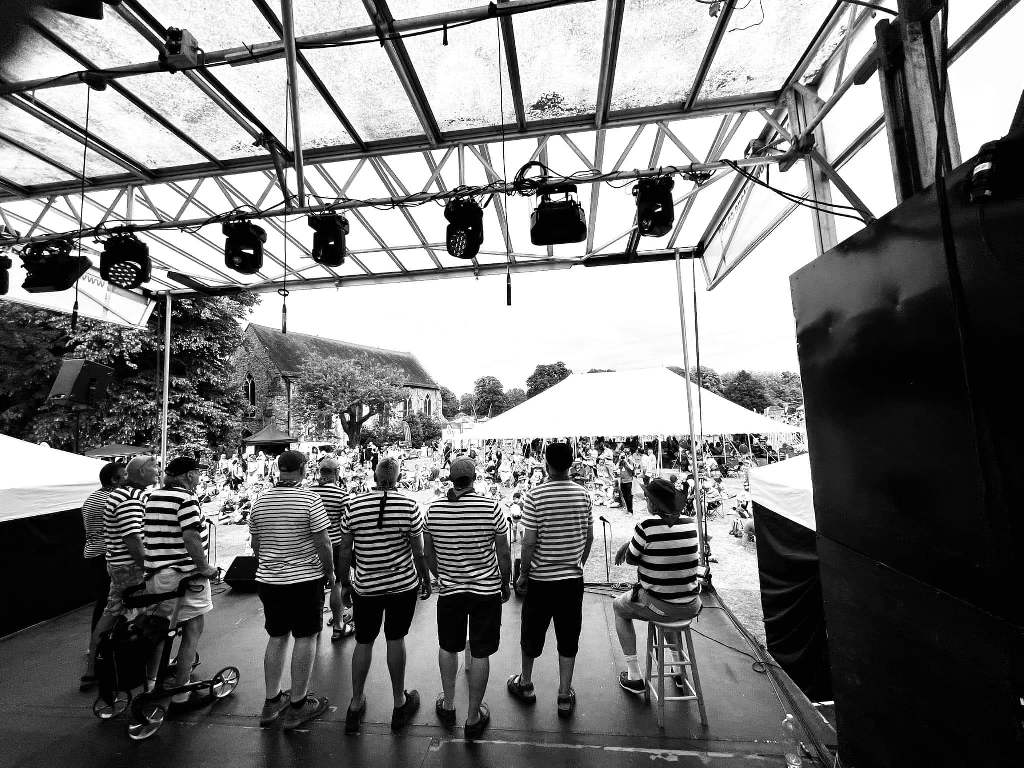
The Selsey Shantymen are a sea shanty group based in Selsey, West Sussex. The group was formed in 2018 by former member and Selsey resident John Bradley, whose passion created a dedicated sea shanty ensemble.
What began as a small group of singers soon developed into a regular performing group focused on maritime music, until Covid hit in 2022. Undeterred the group continued to meet virtually to sing together
Sadly, some of the early members have passed away but their spirit and love of shanties continues at the heart of the group
Since their formation, the group has become closely associated with Selsey RNLI Lifeboat Station, where they regularly perform during the summer months to help raise funds for the RNLI and other local charitable causes.
Through concerts, festivals and community events, they have supported numerous organisations while promoting maritime music and local heritage.
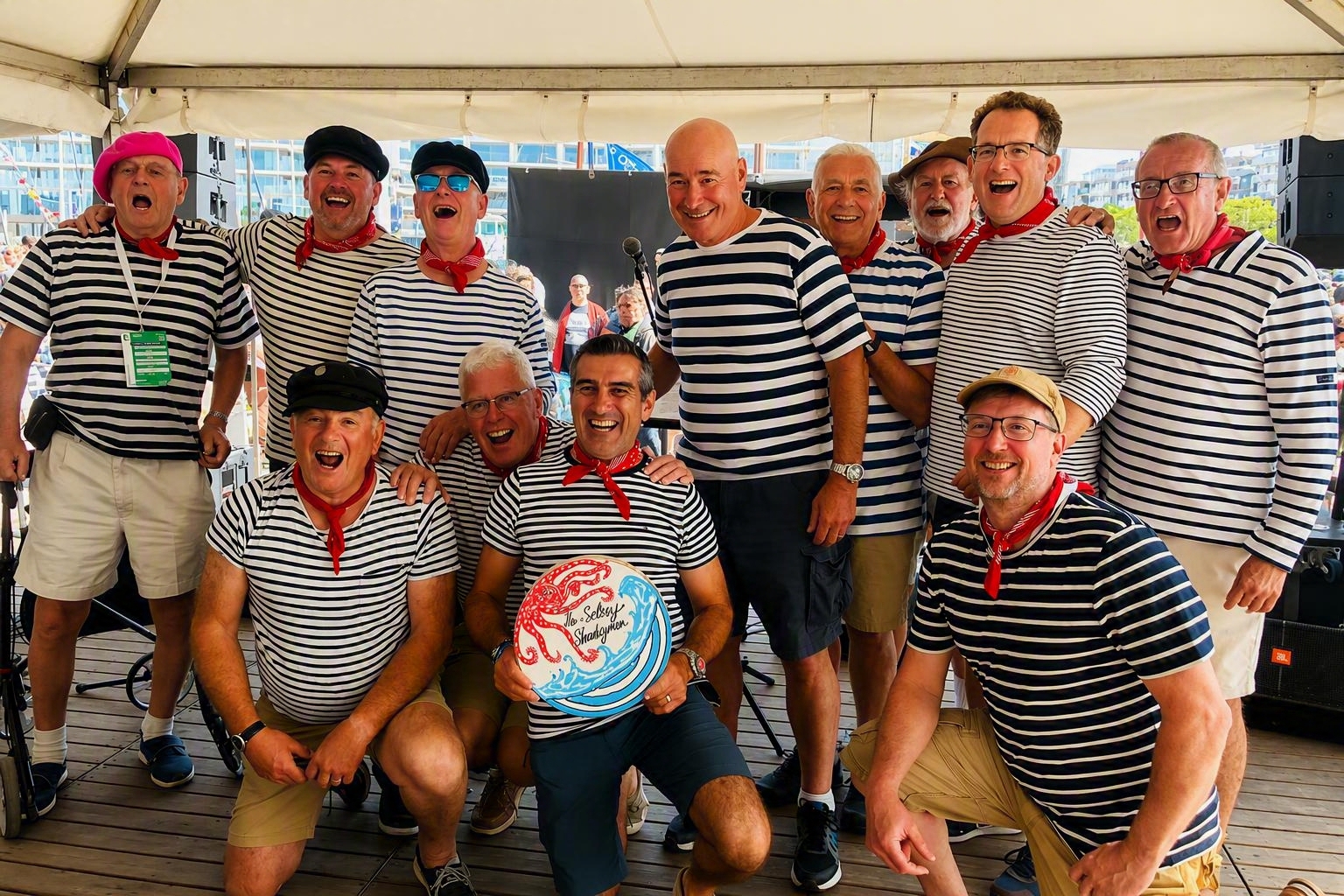
Today, The Selsey Shantymen perform throughout Sussex, the south of England and the continent, continuing to preserve and promote traditional sea songs while supporting their local community through fundraising and public performances.
If we’ve inspired you to join in with us, please drop us an email at contact@theselseyshantymen.co.uk to get in touch!
A Brief History of Selsey
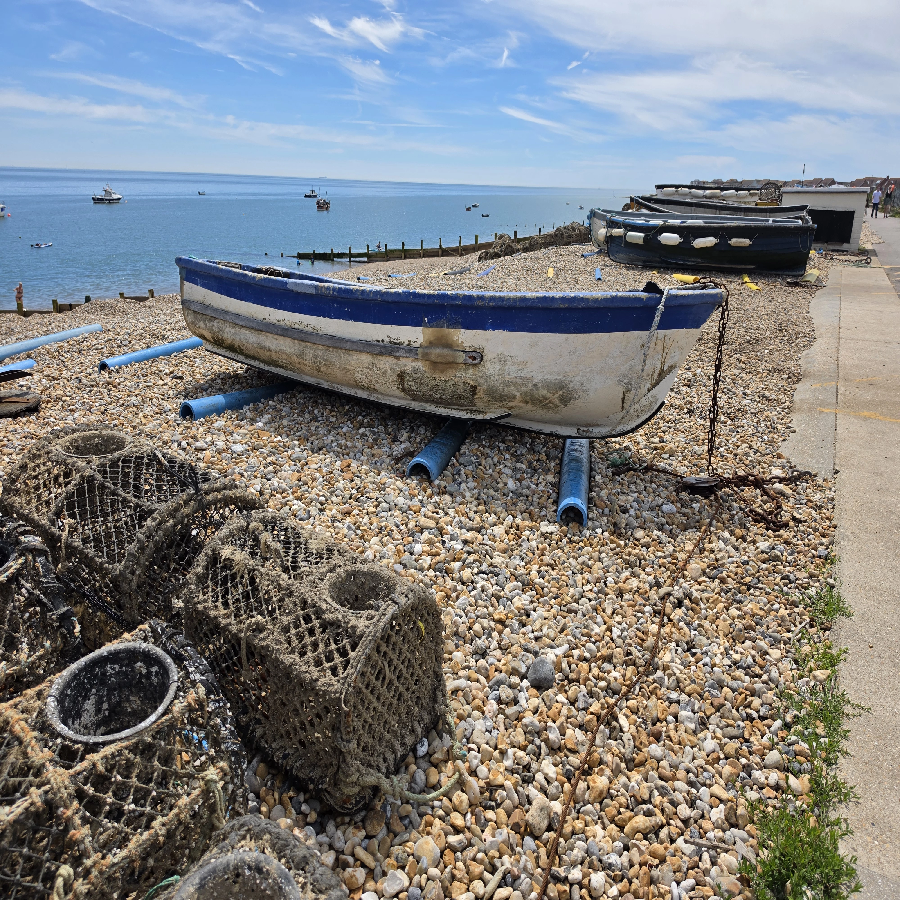
Selsey is a coastal town situated at the southernmost point of the Manhood Peninsula in West Sussex, England. Surrounded on three sides by the sea, the town has a long and enduring connection with fishing, seafaring and maritime trade that stretches back many centuries.
The area was an important centre during the Anglo-Saxon period. In AD 681, Saint Wilfrid established a monastery at Selsey after converting the local population to Christianity. The settlement later became the seat of the Bishops of Sussex, making it one of the earliest centres of Christianity in southern England.
Throughout the medieval and early modern periods, fishing became the foundation of Selsey's economy. Generations of fishermen launched their boats directly from the beaches, creating traditions and skills that remain part of the town's identity today.
During the eighteenth century, the coastline around Selsey gained areputation for smuggling. The isolated beaches and creeks of the Manhood Peninsula provided ideal landing places for contraband goods being brought ashore from across the English Channel.
The sea has always presented dangers as well as opportunities. A history of storms, shipwrecks and coastal rescues led to the establishment of lifesaving services in the area.Today, Selsey RNLI Lifeboat Station continues this proud tradition, protecting those who work and travel at sea.
Modern Selsey has grown into a popular seaside town while retaining its strong maritime character. Its fishing fleet, lifeboat station, maritime heritage and community traditions ensure that the town's relationship with the sea remains at the heart of local life.
What is a Sea Shanty?
Sea shanties were the soundtrack of life at sea. These powerful call and response work songs helped crews coordinate their efforts while carrying out some of the toughest jobs aboard ship. Whether hauling ropes, raising sails, weighing anchor or turning the capstan, sailors sang together to create a steady rhythm that kept everyone working as one.
Different tasks required different tempos and styles of song. A sharp, energetic short haul shanty might accompany a quick pull on a rope, while a slower, more measured capstan or windlass shanty would help crews maintain momentum during long, demanding tasks. Over time, countless variations of these songs emerged, with crews adapting words and melodies wherever their voyages took them.
The word “shanty” is widely believed to have evolved from the French verb chanter, meaning “to sing”, reflecting the rich blend of cultures and traditions found in the world's ports and seafaring communities.
But life at sea was not all hard work. When the day's labour was done, sailors gathered to sing for pleasure. These songs became known as fo'c'sle songs, named after the forecastle, the area where many crew membes lived aboard ship. More tuneful and storytelling in nature, they drew inspiration from ballads, folklore, poetry, love songs, and tales of adventure from around the world.
Today, these songs continue to captivate audiences with their infectious energy, rich harmonies and fascinating history. Every shanty tells a story, whether of stormy seas, distant shores, hard work, friendship, mischief, love or loss.
Here at The Selsey Shantymen, we're proud to keep this tradition alive. Our repertoire includes everything from authentic work shanties and traditional fo'c'sle songs to rousing crowd favourites that will have you tapping your feet and singing along.
Think you can tell the difference between a halyard shanty, a capstan song, and a fo'c'sle ballad? Come and find out!
History of Famous Shanties
There many shanties both traditional and modern. Click the link for the specific shanty and read about the history behind the shanty!
- Alabama - Tells the story of the CSS Alabama and its demise
- All For Me Grog - Tells the tale of a sailor's errant spending
- A Wife In Every Port - A story of a sailor, his wife and their infidelity
- Banks of Newfoundland - Recants life aboard a North Atlantic packet ship
- Billy O'Shea - Drinking in Dublin could have dire consequences, as found out by Billy
- Blood Red Roses - Explores the life and hardships of deep-sea whalers
- Blow The Man Down - When ashore the sailors liked to enjoy themselves and would be known to have the occasional drink!
- Botany Bay - Tells the tale of British criminals being transported to Australia
- Bully Boys - A modern shanty with traditional maritime themes
- Crossing The Bar - Alfred, Lord Tennyson's immortal poem put to music
- Drunken Sailor - Usually the first song that comes to mind when you think of a sea shanty
- Eliza Lee - A nineteenth-century shanty associated with packet ships
- Good Morning Ladies All - An authentic capstan shanty
- Hanging Johnny - A dark, comic sea shanty
- Leaving of Liverpool - Laments leaving the city to find new opportunities in the Americas
- Maid of Amsterdam - Talks of a sailor's encounter in Amsterdam
- Hearts of Oak - A celebratory song of the Royal Navy, relaying their success at sea
- Heavens A Bar - The sailors dream of a wonderful afer-life at the best possible bar
- South Australia - A capstan or timber hauling shanty used aboard the fast clipper ships of the 19th century
- Spanish Ladies - Sailors talked of having to leave the beautiful Spanish ladies
- Sussex My Home - Adaption of the classic Cornwall My Home to honour our beautiful county
- Wellerman - Tells the story of the Weller brothers from Sussex